
Biocarbone pour remplacer le carbone fossile dans la production d’alliages de manganèse
Eramet démontrera l’utilisation du biocarbone pour ses fours de pointe en ferro-alliage de manganèse …

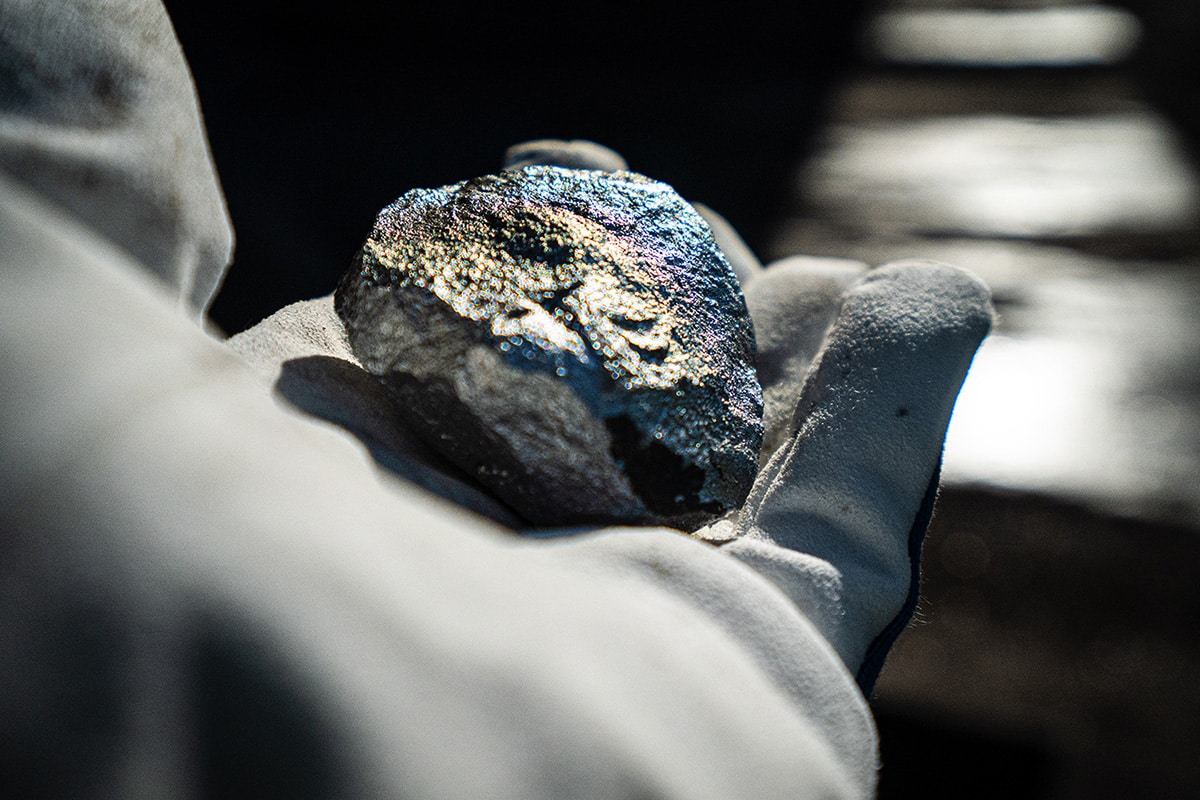
Today all sources for carbon needed for production of manganese alloys are fossil, with the main contributor being the reductant in the form of coke. Reductants take the oxygen from the ores to produce metal. The project will first demonstrate the use of carbon from biomass as a reductant in a large-scale operational environment for production of manganese ferroalloys, before implementing the solution fully at all relevant industrial sites.
In order to establish knowledge allowing production of biocarbons with characteristics potentially suited to production of manganese alloys in current industrial furnaces, Eramet has carried out research and development activities since the 1990s in Norway, in cooperation with research institutes and academia.
The demonstration project stretches from 2021 until 2024 and will demonstrate the use of significant amount of biocarbon (possibly thousands of tons) in industrial operation. The project is supported by a grant from ENOVA, a Norwegian state enterprise administrating grants for activities related to climate, environment, and energy efficiency.
on which the project has a significant impact
Scope 1 – Fossil carbon currently used will be replaced by a sustainable source of biomass which is neutral in terms of emissions from an ETS perspective.
Quantities :
Scope 3 – There will be an impact from production of biocarbon and this has not yet been quantified and compared to current coke production which also emits CO2. Transport emissions are expected to be similar to the ones of cokes.
Quantities : This information is not available at this stage.
Biocarbon is assumed to have zero CO2 emissions from fossil carbon source. Following EU legislation (scope 1), biocarbon have thereby zero CO2 emission The calculation of reduction in CO2 emission is based on the amount of coke displaced by biocarbon times the emission factor from coke to CO2. This emission factor is approximately 3 tCO2/tcoke. It is based on French agency ADEME’s CO2 emissions factor of 0.389 tCO2/MWh and average Eramet plant data.
This is confidential information. The main investments are anticipated to be made by the biocarbon suppliers.
2021
The project will be first implemented in Norway (in the towns of Porsgrunn, Kvinesdal and Sauda). If it is replicable, the solution will be extended to France (Dunkerque), US (Marietta Ohio) and Gabon (Moanda)
We have not identified any major other benefits of the project. A social benefit will be employment for people working in the production of biocarbon.
The potential will depend upon the results of the demonstration project. If this first phase is successful, the concept can be extended to all the manganese ferroalloy plants and other pyrometallurgical industries with similar reductant needs.
henrik.lund@eramet.com
Eramet démontrera l’utilisation du biocarbone pour ses fours de pointe en ferro-alliage de manganèse …